Equipment
Overview
A piece of equipment in Unyha is not simply a stat on a character. It is an object with a life ahead of it — and, if things go a certain way, a life far longer than the person who made it. Most gear stays small and forgettable, passed from hand to hand until it wears out or is lost. But a rare object becomes something else: crafted, made to grow, bound, named, lost, and found again, until it outlives its wielder, its House, and everyone who ever knew what it was for. This is the story of how that happens.
Bound and Unbound
The first thing to understand about any object is whether it is bound. Most of the gear that drifts through the world is unbound — other people's craft come loose, sold or cast off or lost, drifting until someone or something gathers it up again. A troll's hoard, a bandit's cache, a corpse in a crypt: these are full of unbound work, and it is treasure precisely because it is nobody's now. Anyone who finds it may wear it, sell it, or lose it in turn.
Only the truly meaningful things get bound — tied to a soul or to a House. Bound things behave differently from loose ones. They are not lost the way loose gear is lost; they have weight in the world's memory, a thread that keeps hold of them across centuries and hands. Nearly every object you meet is unbound and free — which does not mean it has no story. A loose blade may have passed through a dozen hands and outlived half of them; its history simply isn't anchored to anyone. And binding is not forever: an heirloom can be loosed again, freed back into the world to drift and be found anew, and that unbinding is its own turn in the tale. What binding changes is not whether an object has a story, but whether the world keeps a firm hold of it — whether that story has somewhere to stay.
Crafting: Where an Object Begins
Every object starts as plain work. The four crafting disciplines — blacksmithing, woodcrafting, tailoring, and herbalism — make the raw thing: a blade hammered out of Brimmar steel, a bow, a warded belt, a vial of something that listens. (See Crafting Traditions.) At this stage it is honest and no more: a good tool, worth carrying, worth trading, but not yet worth remembering. Most gear never becomes more than this, and there is nothing wrong with that. A plain blade has killed a great many things.
Enchanting: How an Object Grows
An object grows by having power translated into it. A magical tome — a slim, heavy book that hums against the hand, coughed up rarely by dungeons and deep places — is not a thing to read but a thing to spend. Opened over a crafted item, it pours its bound-up power permanently into the work: a plain edge becomes sharper than sharp, hungry in a way ordinary steel never is. The tome crumbles to nothing, spent; the object keeps what it drank. (See Magic & the Arcane — binding a tome to an item is less enhancement than translation, the knowledge finding a new form to inhabit.)
This is what progression means for equipment in Unyha. Gear does not simply climb a ladder of numbers. It grows by being fed the rare, meaningful things a Spiritfolk finds and chooses to pour into it — so that a piece of well-made craft, worked on over a life, becomes a record of everything its owner thought worth spending on it.
Binding: How an Object Becomes an Heirloom
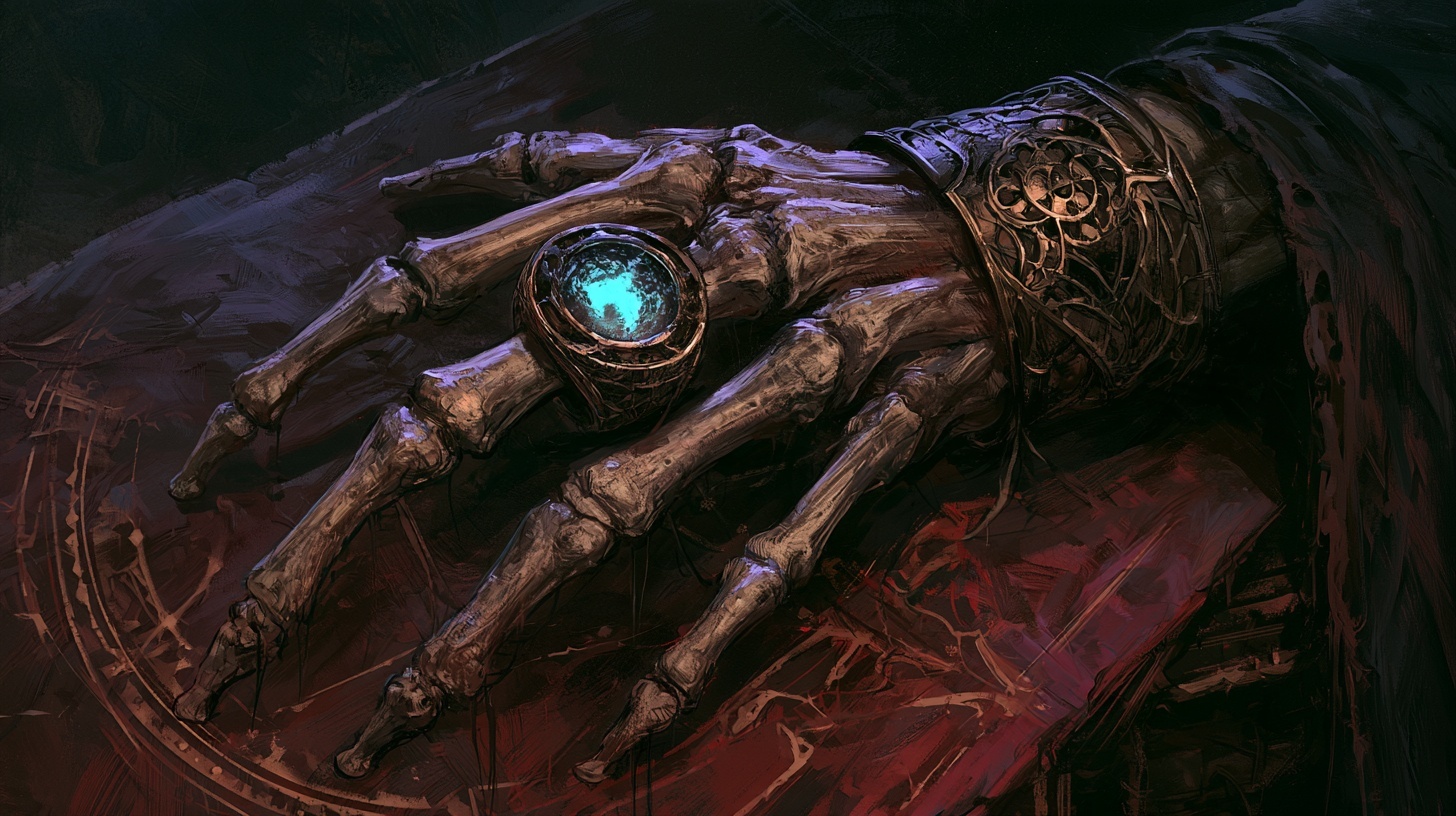
Binding is the deeper act, and it is the one that changes everything. To bind an object is to tie it not to a hand but to a soul or, more often, to a House — to a lineage rather than a person. A bound object becomes an heirloom: recorded in the telling as belonging to that line, destined to pass down to whoever of the House comes after. It gains weight in the world's memory, the same weight a House or a Spiritfolk carries.
And like a House and like a Spiritfolk, a bound heirloom must be named to be real. The maker calls it once, at a Unyha Tree, and the world takes the name and keeps it. From that moment the object is no longer just a weapon; it is a named thing with a claim on the future — the first true thing a House can make to outlast its founder.
Reclaiming: Bound Things Are Never Quite Gone
At the end of a season, most heirlooms are lost — scattered into the world, buried, broken, or carried off — and each is given a final story of what became of it in the long centuries between. But bound things are not lost the way loose things are. The next season, in-world centuries later, the heirloom is out there somewhere, and a House's descendants may undertake reclaim quests, shaped by their own history, to find it again.
They are not the only ones looking. Another House can reach an heirloom first, and finding someone else's heirloom is not theft by default — it is opportunity, and what happens next is the story. An heirloom can spend a season, or ten, in a rival's keeping before it comes home. (See Heirlooms and Season Reset for how loss, inheritance, and reclaiming work.)
How They Outlast the House
A Spiritfolk's story ends. A character lasts only a season. Even a House can fall, or fade, or forget its own past. But a bound heirloom, once it has weight in the world's memory, simply keeps going. It outlasts its founder first, then outlasts the House itself, drifting through hands and hoards and crypts, gathering more story with every season it survives. The oldest bound objects in Unyha have outlived everyone who ever knew what they were for — which is exactly what makes them worth finding.
Actors of Their Own
This is why an old heirloom is best understood not as a possession but as an actor in the long story of the world. A bound object with enough history behind it stops being a thing you own and becomes a thing that happens to you. It is the blade a whole House will not speak of; the relic a rival will kill to keep; the piece of gear whose mere presence in a region bends what people do around it. It swings nothing on its own — and yet an object old and storied enough has, in every way that matters to the world's memory, its own gravity. People organize their ambitions around it. They inherit grudges over it. They walk very long roads on the chance of it.
Conclusion
In a world built to forget, a bound and named object is a small, stubborn act of remembering. It is the surest way a Spiritfolk has of reaching past a single life and a single House into ages they will never see — and the reason that, in Unyha, the question of who holds a certain old blade is never really a question about a blade.