Religion & Ritual
The Absence of Gods
Unyha has no gods — not because the world is godless, but because the world is the closest thing to one, and she is not worshipped. She does not ask for it and does not reward it; prayer to her would be like prayer to gravity. What the world has in place of religion is relationship: between the living and the world, between the dead and the debt they carry, between the Spiritfolk and the long work of keeping wonder alive. Ordinary humanity does not know this, and built religions anyway.
Folk Belief
Without the whole picture, mortals explained the world through smaller stories that hardened into practice: a diffuse belief in luck, in land, in old things best left undisturbed. You leave an offering at a crossroads. You do not build on certain hillsides. You bury your dead with something they loved. In many regions the dead are held to be present rather than gone, and burial rites exist as much to reassure the living as to honor the departed. Folk belief stumbled onto an uncomfortable truth here — that the dead who go unmourned are the ones to fear — and built the wrong explanation around it.
The Spiritfolk as Omens
Because ordinary people meet the Spiritfolk perhaps once in several centuries, they have built rumors rather than theology. Depending on the region and the age, the Spiritfolk have been called heralds of the world-spirit, devil-touched, season-cursed, sacred, or simply dangerous. None of these framings is entirely wrong. None of them is complete.
The Unyha Tree
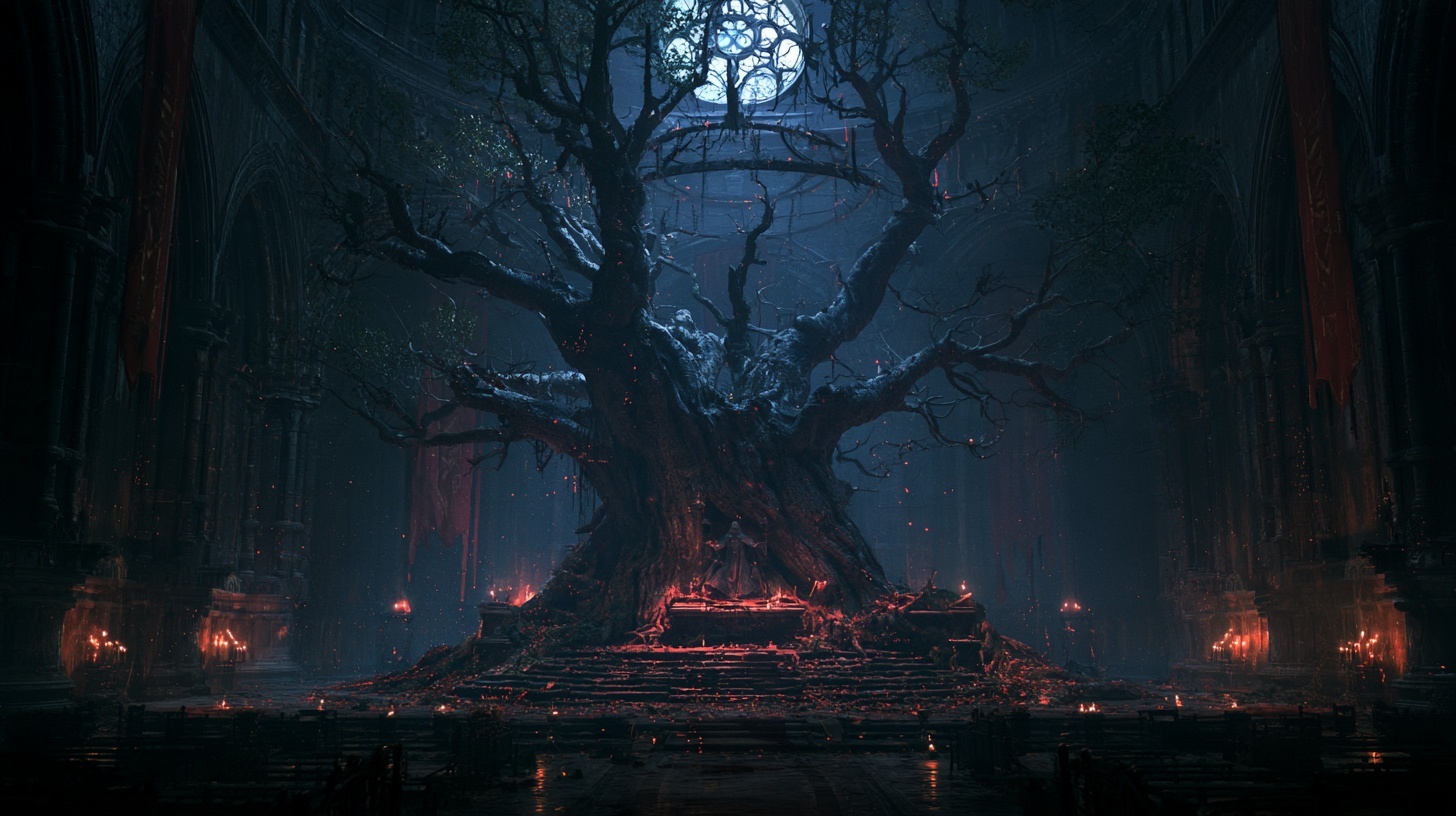
The closest thing the Spiritfolk have to religion is the act of narrating a deed at a Unyha Tree. It has no liturgy: no required words, no officiating priest, no correct form. What matters is only that the deed was real, that it is told honestly, and that the teller knows it is being heard. The tree is not a terminal that stores the story; it is a witness that receives it. It is the most sacred act available to a Spiritfolk, and it is entirely private.
Closing the Loop
Across cultures, death rites amount to the same instinct — close the loop so the dead stay at rest. The deeds of the dead are spoken aloud at the graveside, giving them a record even if a short one; something of theirs is left unfinished for the living to complete; a personal marker is set so they have a clear claim on their own ground. Whether any of it truly prevents the dead from walking is disputed, and the dead walk regardless — but something in the rites matters, to the living who keep them and perhaps to more than that.
Rites of the Season
The season keeps no ceremony of its own — the Spiritfolk arrive and depart on Unyha's terms — but mortals have built small rites around its turning anyway. At the start there is an uneasy alertness: lanterns kept lit, windows barred, or doors marked to signal hospitality, the custom varying wildly by region. At the end there is a quieter moment, once the strangers are gone and only their changed roads, new graves, and traveling rumors remain. The long ordinary centuries between are remembered in oral tradition as a great absence — mourned or celebrated depending on how the last season went.
Stones, Trees, and Crypts
Unyha Trees are the only sacred sites with any active function, and the Spiritfolk find them by feel more than by map. Beyond them stand old stones and carved markers that predate any living memory; they do nothing anyone can measure, yet the air near them is sometimes said to feel heavier in a way that is hard to put into words. And the crypts — tended by hands that differ from place to place — show that the care of the dead has always mattered enough to build for it in stone.