The Circle
Overview
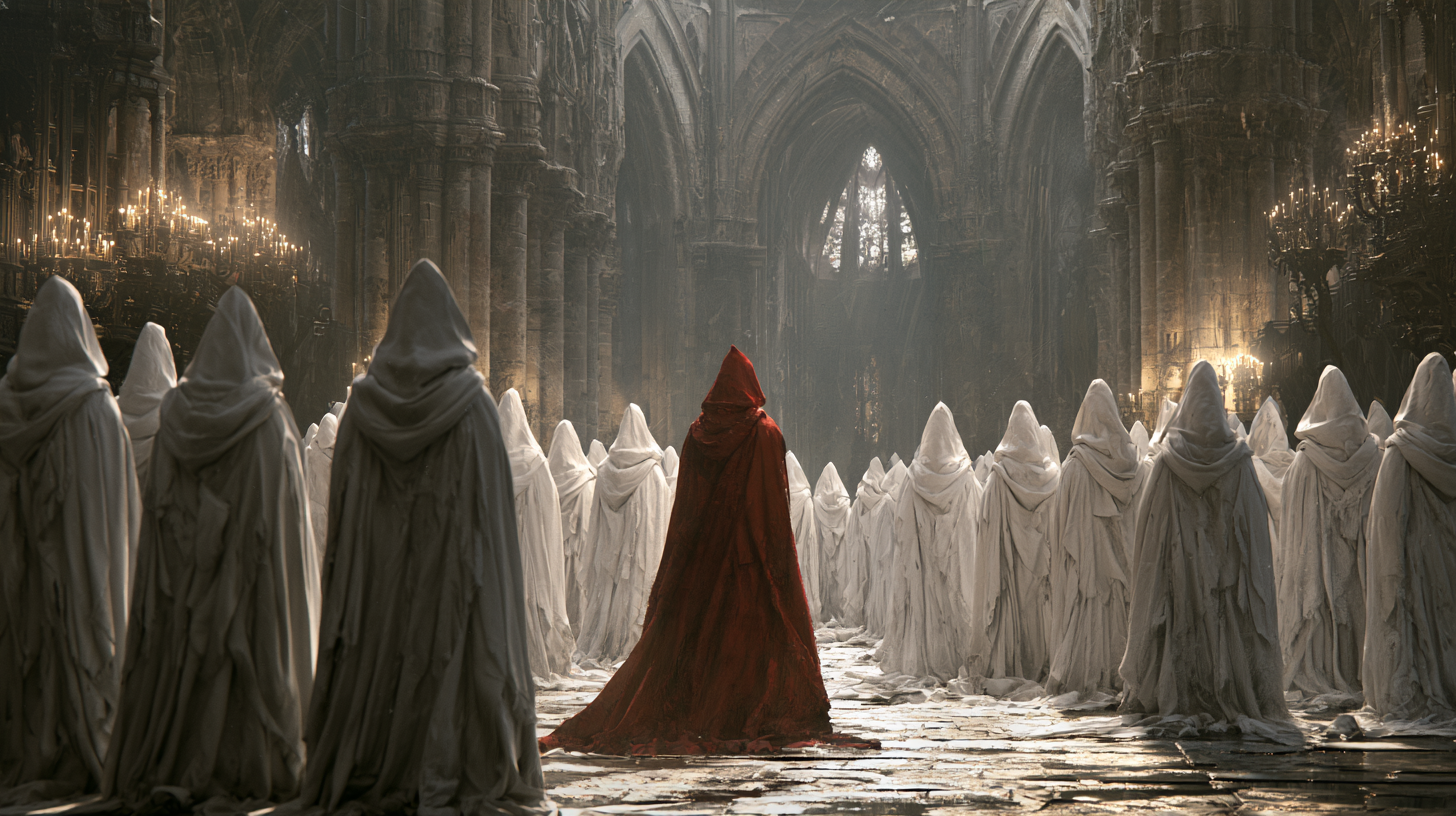
The Circle is the human order that governs Unyha's settled world — the institution behind the cities, the guilds, the guarded districts, and the law that holds them together. To most people alive today it is simply how the world is run, as unremarkable and permanent as the ground underfoot.
The Great Work: The Spell Book
The founding achievement of the Circle was the systematization of magical practice into the spell book. Magic in Unyha is ancient and wild, older than humanity itself, and for ages it could be reached only the old way — through intuition and a lifetime of groundedness with Unyha, the path the Elves refined. That way could never scale. You cannot raise an army of mages who each need a lifetime of communion with the world-spirit.
The Circle's founders did not tame magic or invent it. They built a human framework laid over it: a repeatable, teachable technology reachable through study and materials rather than intuition. They sorted arcane effects by circle and order, measured the drawn power as mana, bound effects to gathered reagents, and fixed incantations into scrolls that could be prepared in advance. Magic ceased to be a grace granted only to the worthy few and became a tool trained people could wield — and access the Circle could license, regulate, and deny.
The Founders
The earliest history of the Circle survives mostly as names and fragments, but three figures are remembered as the ones who did the Great Work:
Aldric Vane, the First Scribe — the systematizer, who insisted magical practice could be codified even if magic itself never could, and sorted reproducible effects into the circles and orders that still organize every scroll cast today.
Sera Molienne, the Reagent-Keeper — who bound every effect to a material cost, reasoning that if the art required reagents to be gathered, traded, and spent, then magic could be governed by whoever controlled the supply. Vane made magic teachable; Molienne made it ownable.
Corvane Duromm, the Wall-Builder — who turned a discipline into an institution: the first guarded districts, the first walls separating the licensed from the unlicensed, the first codified law binding a city to the Circle.
What the Circle Built
Once magical practice could be taught and licensed, the Circle could organize at a scale no earlier power had managed:
The Guilds — the licensed bodies that train, certify, and regulate practitioners of the systematized arts and the skilled crafts. Legitimate practice runs through a guild, under the Circle's sanction.
The City System — the great seats of order, law, and administration; the three greatest are Brimmar, Rikhan, and Darak.
The Guarded Districts — the walled, watched zones where order is enforced most tightly: Duromm's legacy, the boundary between the sanctioned and the wild drawn in stone and gate.
The Circle and the Spiritfolk
Between the Circle and the Spiritfolk lies an arrangement so old that almost no one questions it. The Spiritfolk are tolerated at the margins of the Circle's cities — housed in the taverns and shadowed corners, wanted and unwanted at once — present in the ordered world without ever being fully of it. To the Spiritfolk it feels like the posture of rebels and outsiders. Why the arrangement holds as it does is a question the Circle's histories are very careful about, and very well kept.
Conclusion
The Circle is order's triumph in Unyha: the power that made the wild reachable, the settled world administrable, and civilization something that could be defended in stone. It is the backdrop against which every Spiritfolk moves — the vast, patient system at whose edges the wildness is allowed, just barely, to breathe.