Party Play
Overview
Unyha is playable solo, but it is built for company. A good party is not just more bodies on the field — it is classes covering one another's weaknesses, resources shared across specialties, and, crucially, the ability to pick each other up when a fight goes sideways. Where a lone Spiritfolk who falls is given back at a Tree, a party can keep the whole run alive in the moment.
Reviving in the Field
The heart of party play is the revive. During a dungeon crawl, bringing a downed ally back to their feet is easy — as long as you can control the situation. Clear or hold off the immediate threat, reach your fallen companion, and you can raise them on the spot. A successfully revived Spiritfolk carries straight on, keeping their gear and their story intact: no trip back to a Tree, no momentum lost, no thread of the run broken.
The catch is in those three words: control the situation. A revive attempted in the middle of an uncontrolled fight is a fine way to end up with two Spiritfolk down instead of one. Good parties make space first — a Warrior holds the line, a Mage clears the room, a Ranger's pets buy a moment — and then someone gets picked up. Handled well, going down in a party is a few tense seconds rather than a journey back to a Tree.
Classes That Complete Each Other
Unyha's three classes are deliberately built with gaps that other classes fill. (See Skills and Classes for the full breakdown.) In a party, those gaps become the point:
Warrior — the shield. Any armor and reduced physical damage make the Warrior the frontline, and their Defensive Techniques let them intimidate and taunt crowds of enemies, pinning attention on themselves. In tight spaces, where a mob would otherwise pour past and swarm the back line, that crowd control is what keeps everyone else alive — and Warriors carry Healing on top of it, propping the party up mid-fight.
Mage — the firepower. Devastating magical damage, a passive mana shield, and Alchemy to brew potions and reagents for the whole group. But a Mage wears no armor and takes extra physical damage, so a Mage without a frontline is a Mage about to have a very bad time. Kept behind a Warrior, they are the party's engine of destruction.
Ranger — the sustainer. Tracking & Survival lets a Ranger set a campfire that regenerates health for their pets and nearby allies, topping the party up between fights; Taming brings extra bodies to the line; and Archery adds steady ranged pressure. The Ranger is the glue that keeps a party in the field longer than it had any right to stay.
A Power Player — an unclassified Spiritfolk who trains a bit of everything — is versatile and unpredictable, but takes no class bonuses. Solo, that flexibility shines; in a coordinated party, the specialists' shared strengths usually outpace a single jack-of-all-trades.
Sharing the Load
Beyond the fight, parties pool what their specialties gather and produce — a Mage's alchemy, a Ranger's survival craft and pets, a Warrior's sheer staying power. What one class simply cannot do alone, another covers without a thought. Gathering and sharing across classes is what turns three limited characters into a single capable group, and it is the quiet reason parties go further.
In Short
Solo Spiritfolk make their mark, but a party makes it deeper into the dark and back out again. Cover each other's gaps, keep each other on your feet, and control the fight before you reach for the fallen — that is the whole art of playing together.
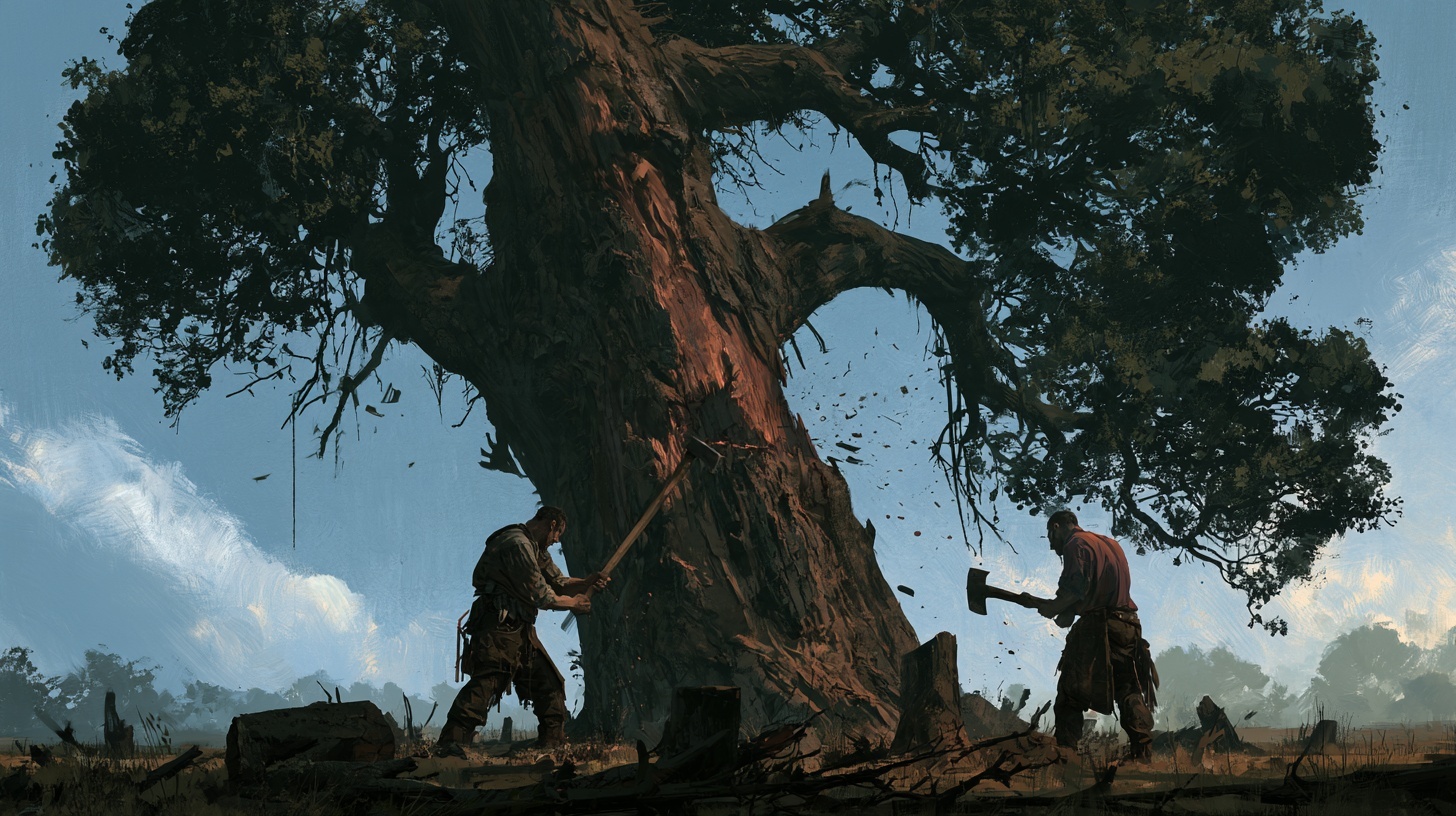
And it is not only fighting — even lumberjacking goes better with a friend. Two lumberjacks working the same trunk can take on a tree twice as tall as either could fell alone.