
Taming
Overview
Taming is the art of turning a wild creature into a companion that fights at your side. It is the Ranger's signature discipline (see Skills and Classes) — anyone can learn to tame, but the Ranger's mastery of it goes far beyond what other classes can manage. A tamed beast is more than extra damage: it is a body on the line, a scout, a guardian, and, handled well, the difference between clearing a den and being cleared out of one.
The Taming Minigame
You do not simply click a beast and own it. Taming is an approach — a slow, careful closing of distance in which the creature is deciding whether you are a threat. Move too fast or too boldly and it bolts, or turns on you. Move slowly, read its temper, and you can bring it around. The wilder and more powerful the animal, the narrower the margin for error, and the more your taming skill has to carry you through the moment.
Not Every Beast Is Equal
Different creatures demand different levels of skill. The first companions a Ranger can tame are small and common:
Birds — light and quick, an easy first tame and a useful scout.
Cats — nimble and low-maintenance, a fine early hunting companion.
Rats — humble but plentiful, the most forgiving creatures to practice on.
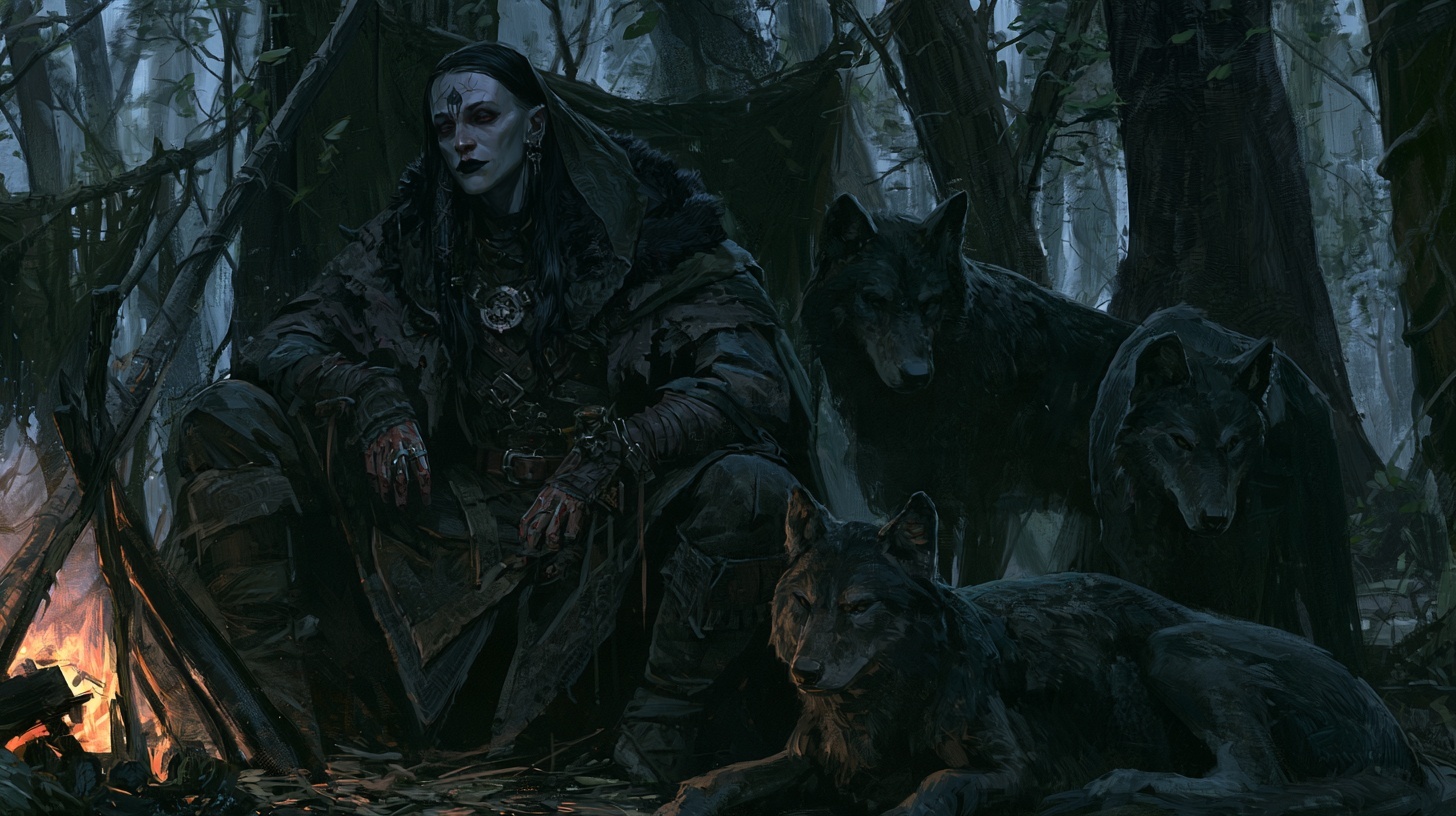
As your taming skill grows, sturdier beasts come within reach — wolves that hunt in a pack, tough and stubborn boars, and other wild animals that would shred a novice's attempt. And the truly powerful or rare creatures are another matter entirely: a bear, a warg, a frost wolf, a shadow wolf, or a polar bear will not yield to anyone but a master, and rarely before a few humbling failures. The most dangerous companions are earned, not found.
How Many Companions?
The number of companions you can control at once is your Ranger level plus one. Ranger level runs from 1 to 4, so a practicing Ranger commands anywhere from two to five companions at a time — and a fifth level, worth a sixth companion, is theoretically reachable, though only by stacking a great many magic items and skill modifiers.
The catch is that a mount counts as a companion. A Ranger has slots to spare, so they can ride and still field beasts — even a whole coordinated pack. Anyone without a Ranger's levels in taming has effectively a single slot, and the moment they saddle up it is spent: mount or pet, not both. This is why, in practice, fighting alongside animals is a Ranger's game.
Training Your Pets
Your taming skill grows through use, and the best way to raise it by far is to let your pets fight. Every time a companion engages in battle, your taming skill ticks upward — so an active beast is a growing one, and a Ranger who keeps their pack working is a Ranger whose command over animals deepens by the day. Sit your pets in a corner and your skill stalls; send them into the fray and it climbs.
Commands
A tamed beast answers to a short, clear set of orders:
Follow — the pet stays at your heel and moves as you move.
Guard — the pet holds position and defends you, striking anything that comes too close.
Kill — the pet is set on a chosen target and presses the attack.
Stop — the pet breaks off and stands down, cancelling its current order.
Transfer — the pet is handed over to another player, passing ownership.
Release — the pet is set free and returns to the wild. This is permanent.
The Pet Interface
You'll find the pet panel at the bottom of the screen, marked with a paw icon. It keeps track of your companions at a glance. It shows your current pets and the state of each — their accumulated experience as they grow more capable, and whether any of them has fallen. A dead pet is not lost forever: it can be revived at an animal trainer. And each pet can be called, which teleports it directly to you — invaluable when a beast has strayed, been left behind, or needs pulling out of a fight gone wrong.
In Short
Approach slowly, start with the beasts you can handle, and keep your companions fighting — that is how a tamer grows. And if you are a Ranger, remember the advantage no one else has: you were never meant to walk with just one.