The Ratkin
Why They Are Everywhere
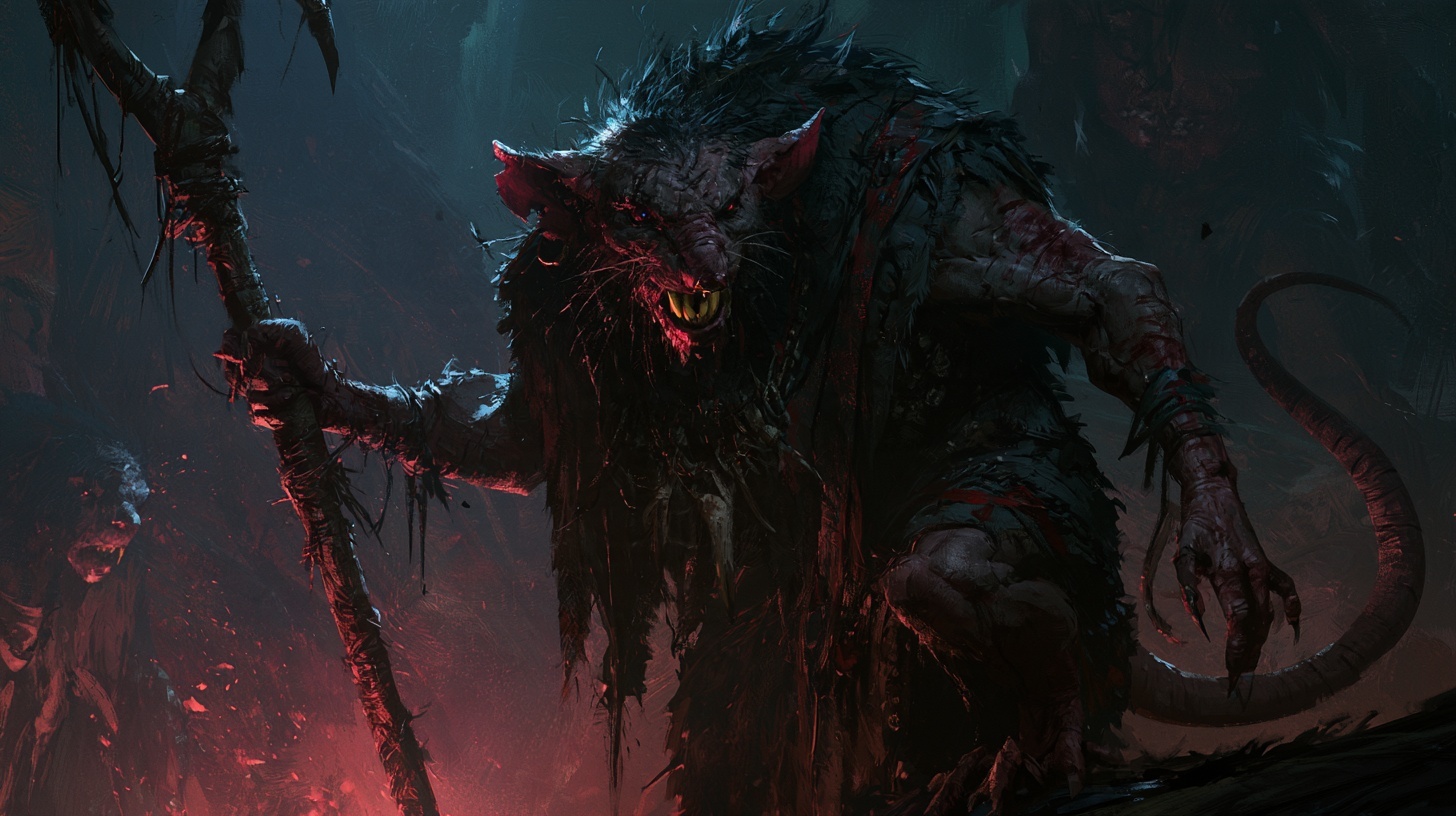
The Ratkin do not build. They inhabit. They find the places civilization leaves behind — the margins, the lower passages, the collapsed quarters no one goes back for — and they fill them, and they have been doing it long enough that their presence in ruins and waste-spaces feels less like invasion than natural consequence. Where the world discards, Ratkin accumulate. They are not mindless and not quite feral: they hold hierarchy, tradition, and a shamanic practice older than most of what surrounds them. They are simply not interested in what civilization values — only in what it drops.
How They Fight
Their great weakness is armor: a Ratkin hit squarely is a Ratkin badly hurt, and they know it. Their entire way of fighting is built around never being hit squarely — lightly built, barely armored, fast, and always happier at range than in a straight melee. Cornered, they are more dangerous than they look, but a Ratkin's first instinct is to make sure the fight happens on its own terms.
The Wild Line
The Ratkin and the common rat are the same line expressed differently — one upright, organized, and armed; the other low, fast, and entirely animal. Both thrive in the same forgotten places, and the rats are the Ratkin's shadow: where rats gather in numbers, where they swell into dire and diseased things, the Ratkin are rarely far behind. A rat infestation is less a nuisance than a notice — that something here has been abandoned long enough for the Ratkin to consider it theirs.
The Ratkin Proper
The humanoid line stands, carries weapons, and organizes into camps and warrens built around whoever holds the most shamanic authority — a people with strong traditions and clear internal status rather than a civilization with borders and laws. Their archers are an extensive and deliberate tradition, from common skirmishers to hunters so committed to accuracy that they have given up movement altogether to become fixed points of devastating fire. And where the line grows large, it grows back toward its animal nature: the ogres and brutes are the exception to the Ratkin rule, shock troops that absorb the punishment the rest of the line is built to avoid.
The Shamanic Tradition
The strangest thing about the Ratkin is their magic. It is not slow, deliberate, or weighted with ceremony — it comes fast, faster than almost any other practitioner in the world, in frantic bursts of stacked casting that can overwhelm a target before they grasp what is happening. The tradition climbs from apprentices through acolytes and mages to the shamans and conjurors who hold a warren's spiritual authority, and finally to the witches in whom all of it compresses into something that simply overwhelms. Where the power comes from is not known. What it becomes at its furthest point is.
Lords and the Black Plague
Two figures sit at the top of a warren. The Lord commands not through tradition but through force — the raw strength the rest of the hierarchy defers to because it must. And beyond even the eldest witch is the Black Plague: the tradition's final expression, where pestilence stops being a weapon and becomes a nature. It is not a wiser shaman or an older witch but something that has crossed into a different category entirely, and no account of facing one has ever ended well enough to be retold. Far from the warrens, in arid country, the same line takes a leaner, harder, desert-adapted form — proof that the Ratkin reach into regions the settled world has barely begun to map.
In Short
The Ratkin are what the world's forgotten places grow when left alone too long. They will not meet you in the open if they can help it — but in the tight passages and collapsed halls that are theirs by long possession, on ground that suits them and not you, they are among the most dangerous things a Spiritfolk can disturb.