The Bandits
What They Are
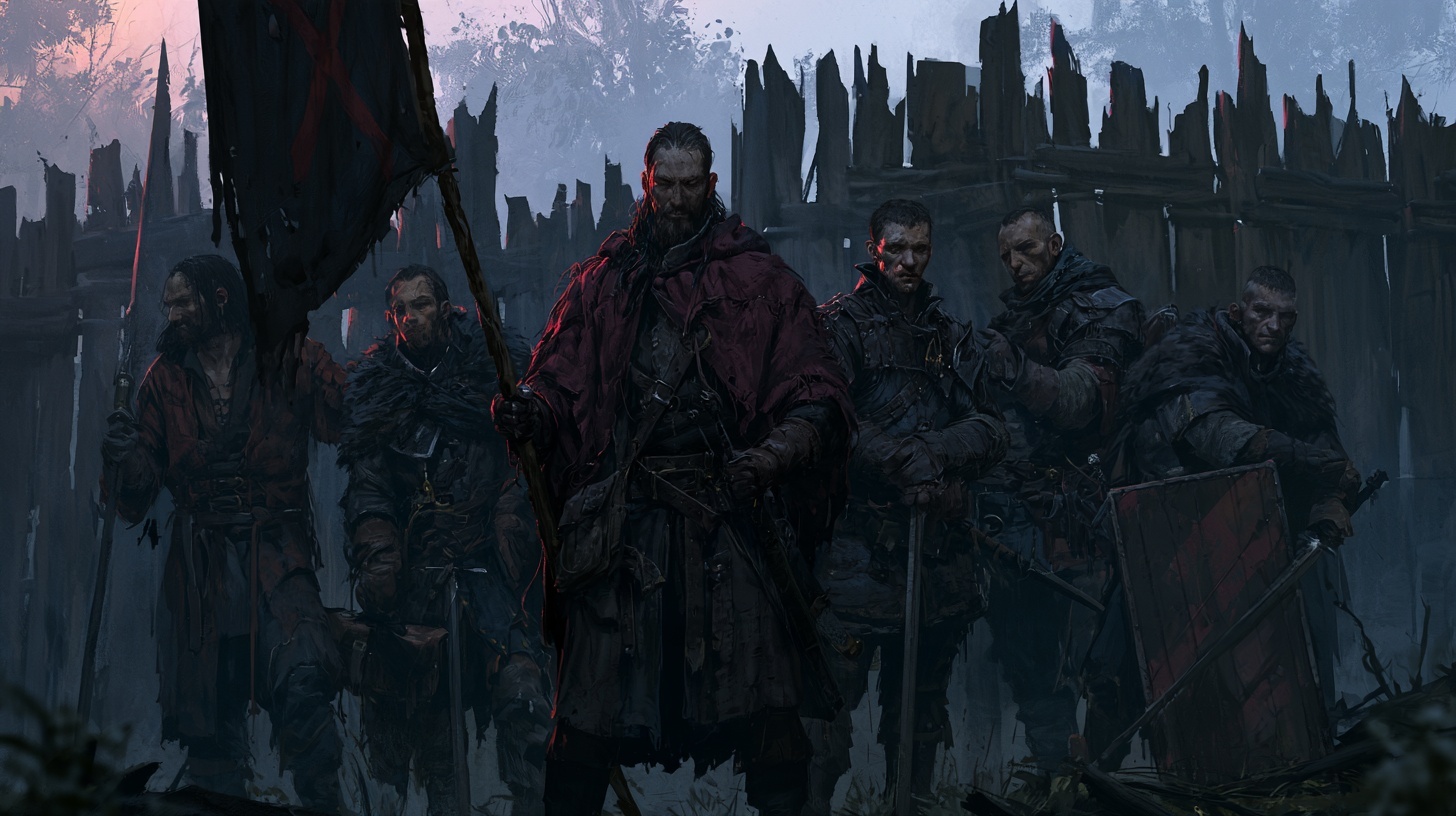
Bandits are people — ordinary humans, the same stock as the townsfolk of the settled world, not the called Spiritfolk — who have placed themselves outside the social contract of civilization and built something in the space they found there. This is what sets a bandit camp apart from every other hostile faction. The orcs are organized around war by nature; the Ratkin inhabit what civilization discards; the undead are the residue of unresolved lives. The bandits chose this — or were pushed into it, or failed their way into it — and, crucially, they keep choosing it, waking every morning in a camp outside the law and carrying on. What they build reflects who they are: a labor class, a fighting line, animal specialists, an arcane fringe, and a Chief who holds it together. It is civilization, inverted.
The Margins of the Camp
At the edges of any camp are the people barely in it: the drunk who ended up here the way a stone ends up in a stream; the raw recruit who does not yet know what they have joined; the miner who may not have had a choice. They are the camp's most human detail, and rarely its most dangerous — but their presence says the camp is growing, or replacing losses, and means to continue.
A Camp That Sustains Itself
Bandits do not merely take; they process, craft, and build a life outside any town's economy. Skinners and leatherworkers form a supply chain that turns what the camp brings in into armor, straps, and practical goods. A working craft economy is the surest sign that a camp is no temporary raiding party — it has been here a while, and it intends to stay.
Dogs and Ambush
The camp keeps dogs — trained, half-trained, and the occasional broken one gone rabid past anyone's control — run by a houndmaster whose whole strength is in what he commands. The fighting line itself moves slowly, because bandits set up rather than chase: ambush is their idiom, and getting ahead of them matters far more than trying to outrun them. Among them are archers, the odd mounted rider, and huntsmen whose skill was earned in the field rather than granted by training.
The Arcane Fringe and the Snake Handlers
Most bandits are all but sealed against magic, so the arcane fringe is made of exceptions — those who had training before, or found it after, or came to the camp because it was the only place that would take them. They range from fumbling apprentices to genuine conjurors, a sign the camp has run long enough to grow real power. Alongside them is a stranger specialty entirely: the snake handlers, who use live snakes as weapon and tool — a handler to control them, a viper who has made the venom his own.
The Chief
At the top is the Chief, holding the whole thing together by force and ruthlessness. Tellingly, the Chief is the last person in the camp to accumulate wealth: everything that comes in goes back out to buy loyalty, fund the operation, and pay for protection. A Chief's camp is regional, with lesser lords answering to it — and cutting the Chief down does not end the operation so much as open a succession crisis, which is its own kind of situation. What a Chief represents is simple and sobering: this is what sustained violence, survival, and the willingness to do what it takes produce in an ordinary human, with no ancient power behind them at all.